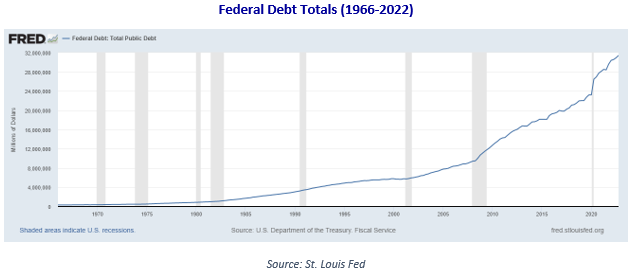
The debt ceiling is the maximum amount of federal debt that the government may incur. This cap ostensibly encourages fiscal responsibility and deficit management. The debt ceiling may change according to spending needs, revenue adjustments, and political tides.
The Constitution grants Congress authority to spend and tax. In turn, legislators pass a budget each year. This process reconciles spending obligations with revenues. Any shortfall adds to federal debt totals. The debt ceiling is a separate but crucial element to this procedure. This limit can only be changed via Congressional vote.
Once a routine process, debt ceiling negotiations have become contentious in recent years. These events require concessions and compromise between the two parties. The last time legislators raised the debt ceiling was 2011. Congress opted to simply suspend the debt ceiling entirely in 2013 and 2019. Each resolution funded government obligations before the dreaded X-Date.
Our blog, “Life Insurance – A Primer”, concluded that Accumulation Universal Life and Whole Life policies have characteristics that warrant their consideration as a complimentary asset class. An asset class is any category of investment that might be held in a liquid investment portfolio. For example, large and small company U.S. stocks, international stocks, bonds, etc. Life insurance is not an investment and would not be directly held in an investment portfolio but can be an important complement to the fixed income, or bond portion, of a balanced portfolio.
Let’s first look at bonds to better understand how.
A typical long-term portfolio has a 60 or 70 percent allocation to stocks with the balance in bonds. The bond allocation serves to dampen portfolio volatility. First, because bond returns are less volatile than stocks, and second, because their returns have very little (.02) correlation with large-cap U.S. equity returns. Bonds also generate taxable interest income.
A bond portfolio’s return is the combination of changes in its market value and the interest income. The market value of a bond portfolio rises and falls inversely with the direction of interest rate movements. (In 2022, the worst year ever for bonds, the most popular bond index was down 13%, due to the Fed’s dramatic increase in interest rates.) In the accumulation phase of a portfolio’s life cycle, the income is usually reinvested. In the late-stage phase, the income is often distributed. The historical return for bonds is between 4% and 6% since 1926. Let’s see how life insurance complements the valuable role played by bonds.
Parents have long supported their adult children. Traditional areas for contribution include education, weddings, and first homes. However, recent data suggests that parents are subsidizing their children’s lives more than ever before. This support often extends to areas traditionally under the child’s purview, an alarming reality for parents approaching retirement. This article explores various macro-economic and attitudinal factors contributing to the phenomenon. Following are considerations, strategies, and potential solutions for forward-looking parents.
A recent Bankrate report unsettled financial planners across the industry. The survey found that nearly 70% of parents have sacrificed their own finances to assist their adult children. Over half of these parents say they are forgoing debt payments and even tapping emergency savings. A majority also say they are delaying or abandoning important financial milestones, such as retirement. Lower income households are more likely to extend financial support, further complicating the problem.[1]
This data is undoubtedly concerning. However, the findings should not surprise anyone following the financial news. Inflation hovers near record-high levels and recession risks loom. A review of recent trends may provide context and inform potential solutions.